
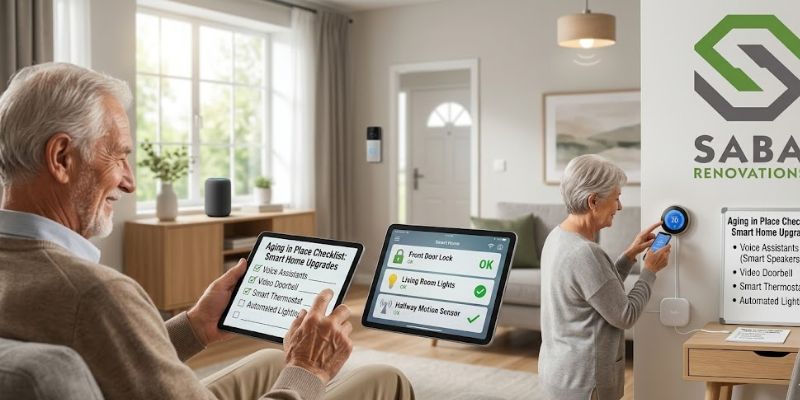
Aging in Place Checklist: Smart Home Upgrades for Senior Living
People prefer remaining in their houses in their old age since they have many memories associated with them. However, houses are not built to provide a suitable environment for elderly individuals, hence the need for home renovations. In most cases, it is more economical to adapt your residence to meet your needs than relocating. This aging in place guide highlights some home renovations that do not alter the look of your house while making it friendly to the elderly individual.
Aging in Place in Real-life Scenarios
Unlike complete remodeling of one’s residence, aging in place involves minor renovations that help elderly individuals live comfortably without moving.
In most cases, senior living does not necessarily mean moving into assisted facilities; it implies living independently for as long as possible. Therefore, some examples of renovations might include adequate lighting, removal of hazards, or fixtures that do not need excessive force to work.
Begin with Reasonable Accessibility Renovation Planning
A reasonable approach to home renovations starts with assessing how your current living space works. Accessibility renovation planning should be based on an objective analysis of priorities rather than an attempt to change everything at once.
Assess Your Living Space in a New Way
When looking at every nook and cranny of your home with a fresh perspective, you’ll find some unexpected problems. Small issues, like cramped spaces or slippery tiles, could cause serious problems with home safety when you’re older. By detecting potential hazards before they occur, you can prioritize their timely resolution.
Don’t Try to Fix Everything Right Away
Changing all elements of your home at once is an unrealistic goal that will lead to unnecessary expenses and frustration. It makes more sense to focus on the most frequently used spaces in your house.
An incremental approach to creating a comfortable environment that promotes aging in place provides flexibility and prevents you from having to commit to something upfront.
Bathroom Improvements that Make a Difference Every Day
As one of the most dangerous places, there is no doubt that bathrooms require proper care.
Simplicity is Key When Making Your Bathroom Safer
Among other things, grab bars may be the easiest addition that will definitely come in handy. In addition to grab bars, non-slip floors should also be installed. Another feature that makes bathrooms safer is the walk-in shower. It eliminates the need to climb over the rim of the bathtub.
Reduce Effort for Daily Activities
Little things like raising the height of a toilet seat, installing a shower chair or adding a handheld shower are very useful and may become a solution for many seniors who have mobility issues. Proper lighting and easily accessible storage areas are important, too.
Modifications for Kitchens That Remain Functional
There is no need to remodel kitchens to make them safe. A few changes will be sufficient.
The installation of pull-out drawers will make access to things easier. Lever taps are also more comfortable if one experiences a loss of strength or flexibility. Induction cookers are a safer alternative since there is a reduced risk of burns.
These considerations should be taken into account when drafting an accessibility home improvement guide for ensuring practicality.
Technology That Makes Sense
All the fancy technology in the world cannot help unless you use the correct devices. These are the technologies that will help make the home smarter and more convenient.
Voice assistants will make controlling temperature and lighting a breeze without forcing one to get up and change settings. Automated lights are convenient in the evenings, and a security system adds a layer of safety. Consider installing emergency alert devices too.
Incorporating them into the guide will ensure adaptability without sacrificing practicality.
Changes to Flooring and Layout That You Will Thank Yourself For
Sometimes, it is often the little things that mean the most.
Replacing any slip-prone flooring could go a long way towards preventing accidents from happening. Maintaining the same floor throughout makes for smoother transitions. Adequate lighting, particularly in hallways, is an additional feature to include.
More room should also be factored into the equation. Removing excess clutter and creating wider paths is another change that can contribute to greater comfort and safety in one’s own home.
Budgeting Effortlessly
Budgeting is not as difficult as it is made out to be.
It merely requires prioritization and a proper plan. Start by tackling those projects deemed to be most important and then proceed from there. It is essential to budget for any eventualities because there will always be some expenses that pop up unexpectedly.
One should focus on finding a balance between cost and durability rather than simply opting for the most economical choice available.
Conclusion About Creating a Home that Lasts
A home that allows for long-term living does not necessarily look any different; it just works better for those who live in it. The majority of the recommendations we have made involve improving one’s daily routine rather than creating radical changes.
Involving the right experts in creating a plan will help you avoid common errors. Our company, Saba Renovations, specializes in designing improvements that make sense from the practical point of view.
Why It Matters to Have an Experienced Person Around
Some home upgrades may seem simple but still become rather difficult when approached incorrectly. Having an expert by your side will eliminate potential complications.
Our team will develop a realistic plan that will allow you to improve your house without spending too much time on it. When working together with Saba Renovations, everything related to safety and comfort is going to be a lot easier.