
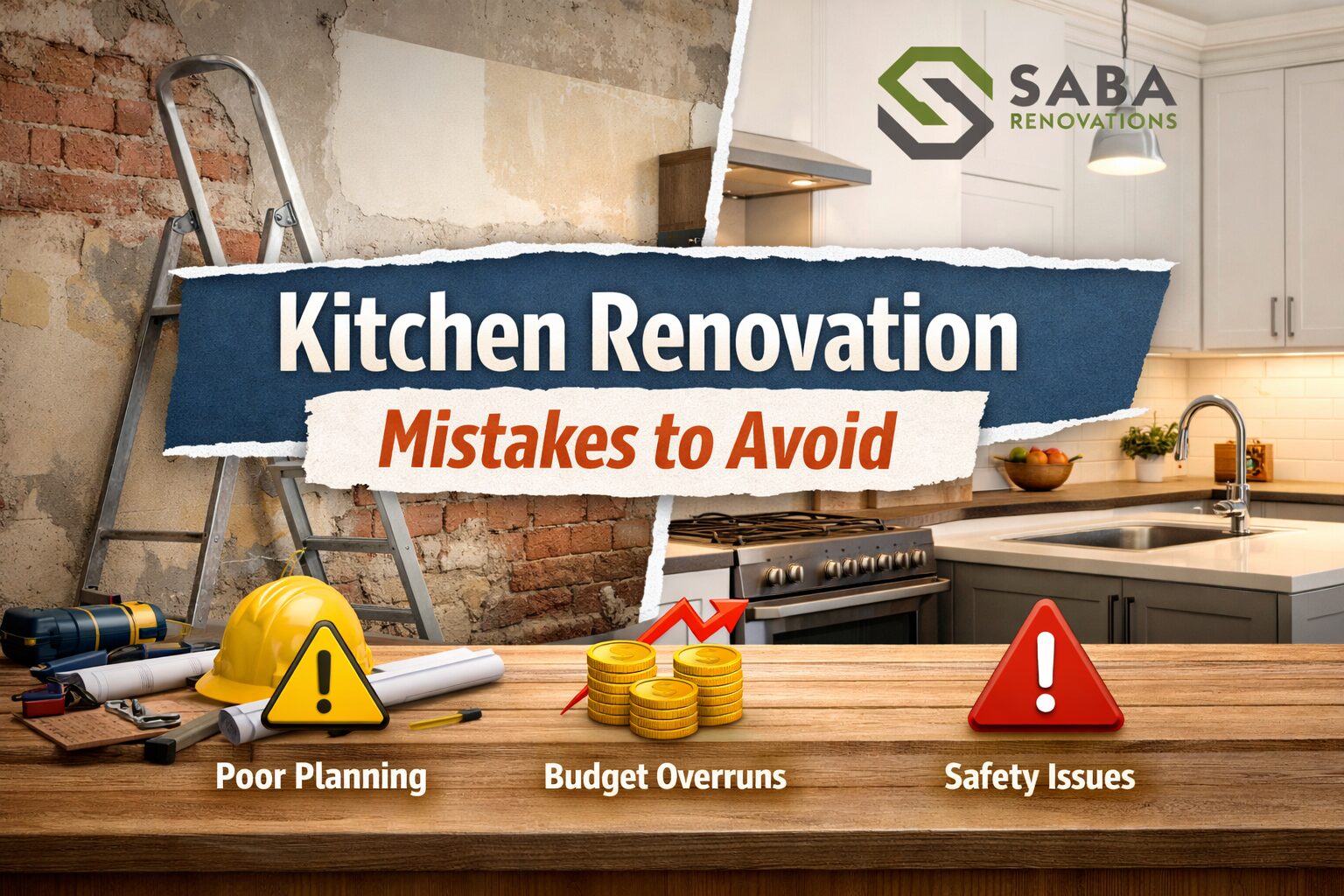
Most Common Kitchen Renovation Mistakes to Avoid
When planning a remodel, understanding the kitchen renovation mistakes to avoid is critical to achieving a functional, safe, and long-lasting result. Sydney homeowners are known to underestimate its complexities, which results in budget overruns, compliance problems and poor layouts. The planned approach to kitchen renovation assists in the avoidance of expensive mistakes and the subsequent provision of the final area that would meet the requirements of the lifestyle and the regulations. At Saba Renovations, we take on every project with a problem solving attitude, which is accurate about materials and execution quality. Avoiding common pitfalls begins with informed decisions and realistic expectations.
Key Tips to Avoid Kitchen Renovation Problems
Any successful project is based on effective kitchen renovation planning. Even superior quality materials and finishes will not cover bad decisions in planning or workflow inefficiencies.
Core Planning Mistakes to Watch
- Poor Work Triangle Configuration
Overlooking the relationship between the sink, stove, and refrigerator disrupts kitchen efficiency. This leads to unnecessary movement, increased fatigue, and reduced usability during daily cooking tasks. A properly planned layout improves workflow, reduces time spent moving between zones, and enhances overall functionality.
- Overcrowded or underutilized space allocation
The inability to strike a balance among storage, counter-space and appliances arrangement leads to clutter or empty spaces. This usually occurs because of poor kitchen budget planning and failure to evaluate professional layout. Space optimization will mean more efficient storage options and a more orderly kitchen space.
Avoiding Budget Miscalculations and Cost Overruns with Kitchen Renovation Planning
One of the most common errors to avoid during kitchen renovation is budget management, especially when the homeowner fails to estimate the hidden expenses or they focus on the beauty rather than on the functionality of the structure.
Financial Planning Pitfalls
- Underestimating material and labour costs
Numerous renovation undertakings exceed the budget because of the fluctuating material costs and skilled labour demands within Sydney. The lack of proper planning of a kitchen budget can cause a project to stagnate or need quality compromises. A realistic budget makes the project run smoothly and avoids disruption of projects at mid-way.
- Ignoring contingency for unexpected repairs
Unforeseen problems like plumbing problems, electrical renovations, or building defects tend to arise during renovation. These may derail timelines and finances without having a contingency buffer. Setting aside a contingency fund will make sure that any unforeseen issues are addressed without undermining the end result.
Material and Equipment Selection Errors
The selection of the wrong materials or equipment may also have great influence on the durability, safety and after-lasting maintenance.
Material Selection Challenges
- Using non-durable surfaces in high-use areas
Choosing material that cannot resist heat, dampness or frequent use will result in premature damage and expensive replacement costs. This is one of the problems that are prevalent in the lack of proper kitchen renovation planning. Durable materials are long-lasting and the cost of maintenance is minimized in the long run.
- Mismatched appliances and cabinetry specifications
Incorrect measurements or incompatible fittings can cause installation delays and functional issues. This is usually caused by poor management between the suppliers and the contractors. Specification alignment makes the installation process smooth and the use of the product lasts long.
Compliance, Safety, and Technical Oversights in Kitchen Renovation
Disregarding building codes and safety standards is one of the critical errors that should be avoided during kitchen renovation, particularly in controlled markets such as Sydney.
Regulatory and Safety Risks
- Improper electrical and plumbing installations
Non-compliant installations can lead to safety hazards, including fire risks and water damage. These issues often arise when unqualified contractors are involved. Ensuring compliance with local regulations protects both property and occupants.
- Inadequate ventilation and fire safety measures
Kitchens require proper ventilation systems to manage heat, smoke, and moisture. Neglecting this can lead to long-term structural damage and health concerns. Proper ventilation improves air quality and extends the lifespan of kitchen components.
Design Mistakes That Affect Usability
A visually appealing kitchen must also function efficiently. Poor design decisions can compromise usability despite high-end finishes.
Design and Practicality Conflicts
- Overcomplicated layouts and impractical features
Incorporating trendy elements without considering usability leads to inefficient spaces. This is often seen in poorly executed kitchen design ideas that ignore real-life usage patterns. Functional design ensures that the kitchen remains practical for daily use.
- Insufficient lighting and workspace planning
Poor lighting placement affects visibility and safety, especially in food preparation areas. This is a common oversight in rushed kitchen budget planning processes. Proper lighting enhances both safety and visual appeal.
Project Management and Execution Failures
Even well-planned designs can fail without proper execution and coordination.
Execution-Level Challenges
- Unstructured timelines and contractor mismanagement
Delays often occur when multiple trades are not properly scheduled or supervised. This results in extended project durations and increased costs. Professional project management ensures timely completion and efficient workflow.
- Inadequate communication between stakeholders
Misalignment between designers, contractors, and homeowners leads to errors and rework. Clear communication is essential for successful kitchen remodeling outcomes. Coordinated efforts ensure that the final result matches the original vision.
Tools, Equipment, and Installation Gaps in Kitchen Remodeling
The tools and techniques used during installation directly affect the quality and durability of the renovation.
Technical Execution Issues
- Inaccurate measurements and cutting techniques
Poor workmanship leads to misaligned cabinetry, uneven surfaces, and structural weaknesses. This is a frequent issue in low-quality kitchen remodeling projects. Precision tools and skilled labour ensure a flawless finish.
- Use of outdated or inefficient equipment
Modern kitchens require advanced installation techniques to ensure durability and efficiency. Using outdated tools compromises both quality and safety. Updated equipment improves installation accuracy and long-term performance.
Make the Most of Best Kitchen Design Ideas to Avoid Common Mistakes
Understanding the kitchen renovation mistakes to avoid is essential for achieving a successful outcome. From kitchen renovation planning to material selection and compliance, every stage requires careful consideration and professional execution. At Saba Renovations, we focus on structured planning, technical precision, and regulatory compliance to deliver kitchens that are not only visually refined but also highly functional and durable. Avoiding common mistakes is not just about saving costs—it is about creating a space that performs reliably for years to come.