
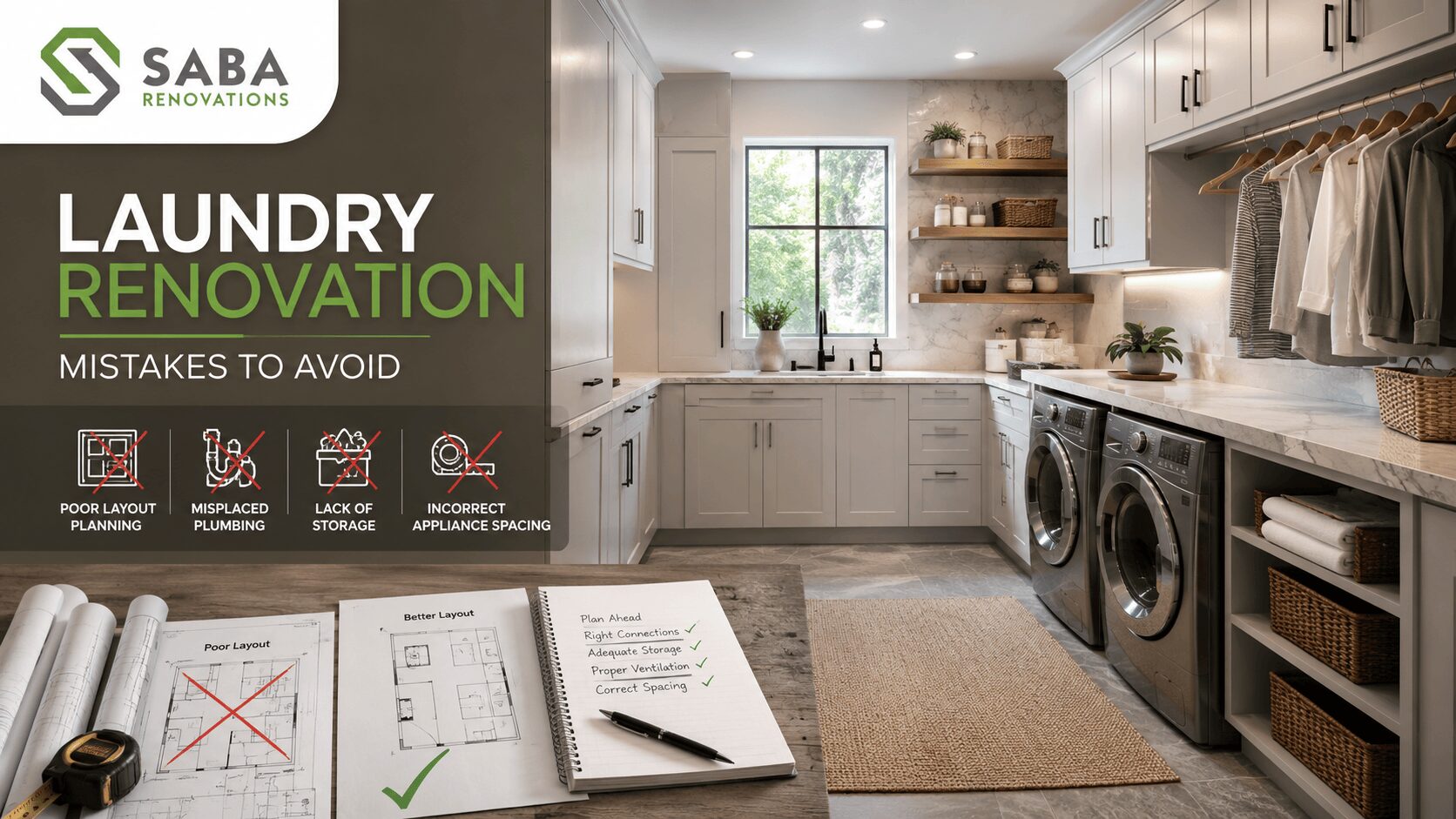
Laundry Renovation Mistakes to Avoid: Expert Tips for a Functional, Long-Lasting Space
Laundry rooms are often one of the most overlooked spaces during home upgrades. Many homeowners focus heavily on kitchens and bathrooms while treating the laundry area as an afterthought. The result? Poor layouts, limited storage, ventilation issues, and expensive corrections later on. Understanding the key laundry renovation mistakes to avoid can save you money, improve functionality, and make daily routines far more efficient.
A well-designed laundry room should support workflow, maximize space, and withstand moisture, heat, and constant use. Whether you are updating a compact laundry closet or redesigning a full utility room, avoiding common renovation errors is critical for long-term performance.
This guide explores the most common laundry room renovation mistakes to avoid, along with expert-backed renovation tips, planning strategies, and practical design advice homeowners often wish they knew earlier.
Why Laundry Renovations Require Careful Planning
Unlike decorative renovations, laundry room upgrades involve plumbing, drainage, electrical systems, ventilation, moisture control, and ergonomic design. Mistakes in these areas can lead to structural damage, mold growth, appliance inefficiency, or frustrating day-to-day use.
Many renovation problems happen because homeowners underestimate the importance of laundry renovation planning. A laundry room may be smaller than other areas of the home, but it has highly technical requirements.
Some of the most common renovation regrets include:
- Not enough storage
- Poor appliance placement
- Inadequate ventilation
- Insufficient lighting
- Water damage from improper waterproofing
- Overspending on unnecessary finishes
- Ignoring workflow efficiency
Good planning helps prevent all of these issues before construction begins.
Renovation Mistakes That Ruin Laundry Room Functionality
Ignoring Workflow During Laundry Planning
One of the biggest renovation mistakes homeowners make is designing the room based only on appearance rather than workflow.
A functional laundry room should follow a natural sequence:
- Sorting dirty clothes
- Washing
- Drying
- Folding
- Storing clean items
If appliances, counters, and storage are poorly arranged, everyday tasks become frustrating.
Real-Life Example
A homeowner installed beautiful floor-to-ceiling cabinets but forgot to leave folding space beside the dryer. Every laundry load had to be carried to another room for folding. The renovation looked impressive but created daily inconvenience.
Expert Tip
Use proven laundry room workflow design principles:
- Keep the washer and dryer side-by-side when possible
- Place folding surfaces nearby
- Store detergents within arm’s reach
- Include baskets for sorting
Even compact laundry rooms benefit from workflow-focused planning.
Choosing Style Over Practicality
Many homeowners prioritize trendy finishes while ignoring durability.
Gloss cabinets, delicate stone surfaces, and decorative lighting may look attractive initially, but laundry rooms experience:
- Moisture
- Temperature fluctuations
- Detergent spills
- Heavy appliance vibration
Materials must withstand regular wear.
Better Alternatives
Instead of overly delicate materials:
- Choose moisture-resistant cabinetry
- Use durable quartz countertops
- Install waterproof flooring
- Select washable paint finishes
Smart material choices reduce future repair costs and maintenance headaches.
Laundry Planning Errors That Increase Renovation Costs
Underestimating Laundry Cost Factors
Budget overruns happen frequently because homeowners focus only on cosmetic upgrades.
True laundry cost factors include:
- Plumbing relocation
- Electrical upgrades
- Ventilation improvements
- Waterproofing
- Cabinet installation
- Appliance clearance requirements
- Flooring preparation
Unexpected structural or utility work often becomes the most expensive part of the renovation.
Professional Insight
Moving plumbing lines even a short distance can dramatically increase labor costs. Keeping washer locations close to existing plumbing often saves thousands during renovation.
Renovation Tips for Budget Control
- Finalize layout before demolition
- Confirm appliance dimensions early
- Build contingency funds into the budget
- Prioritize function before aesthetics
- Avoid frequent design changes mid-project
Buying Appliances Before Final Measurements
This is one of the most overlooked laundry renovation mistakes to avoid.
Modern washers and dryers are often larger than expected, especially front-load models with pedestals. Some homeowners discover too late that:
- Doors cannot fully open
- Cabinets block access
- Ventilation space is inadequate
- Walkways become cramped
Use a Laundry Room Dimensions Guide
A proper laundry room dimensions guide helps ensure:
- Appliance doors clear comfortably
- Ventilation requirements are met
- Cabinets fit properly
- Walkways remain functional
Recommended Clearance Guidelines
- Minimum 900mm walkway space
- 25–50mm appliance side clearance
- Additional rear clearance for hoses and vents
- Comfortable folding counter height around 900mm
Always measure actual appliance specifications, not generic estimates.
Laundry Room Layout Ideas That Prevent Common Problems
Poor Storage Planning
Insufficient storage quickly turns laundry rooms into clutter zones.
Homeowners often underestimate how many items need storage:
- Detergents
- Cleaning products
- Ironing supplies
- Baskets
- Pet items
- Vacuum cleaners
- Household linens
Without dedicated storage, countertops become overcrowded.
Smart Laundry Room Layout Ideas
Practical laundry room layout ideas include:
- Vertical cabinetry
- Pull-out hampers
- Open shelving for daily-use items
- Tall cabinets for brooms and mops
- Overhead storage above appliances
Even small rooms can feel organized with thoughtful storage integration.
Forgetting Counter Space
Many laundry renovations prioritize cabinets while forgetting folding areas.
Lack of counter space creates inconvenience every single day.
Pro Recommendation
Include at least one uninterrupted folding surface.
If space is limited:
- Add pull-out counters
- Use countertop bridges over front-load appliances
- Install fold-down wall-mounted surfaces
Functional workspace matters more than decorative elements.
Renovation Tips for Better Ventilation and Moisture Control
Poor Ventilation Setup
Laundry rooms generate substantial humidity. Without proper airflow, moisture problems develop quickly.
Consequences include:
- Mold growth
- Peeling paint
- Musty odors
- Cabinet damage
- Reduced appliance efficiency
Common Mistakes
Homeowners often:
- Use incorrect dryer vent materials
- Install excessively long vent runs
- Ignore air circulation
- Skip exhaust fans
Expert Ventilation Advice
Proper ventilation should include:
- Short, direct dryer vent routes
- Exterior venting
- Adequate room airflow
- Exhaust fans where necessary
This is especially important for enclosed or windowless laundry rooms.
Ignoring Waterproofing
Water leaks are inevitable at some point in a laundry room’s lifespan.
Without waterproofing:
- Floors may swell
- Walls can absorb moisture
- Structural damage becomes costly
Smart Prevention Measures
Professional renovators often recommend:
- Waterproof flooring
- Floor drains where possible
- Leak detection systems
- Water-resistant wall materials
- Washing machine shutoff valves
Small preventative investments can avoid major future repairs.
Common Laundry Room Workflow Design Mistakes
Poor Lighting Choices
Lighting affects both functionality and comfort.
Many homeowners install a single overhead light and later discover shadows make sorting stains or folding difficult.
Ideal Laundry Lighting Setup
Combine:
- Ambient lighting
- Task lighting
- Under-cabinet lighting
- Natural light when available
Bright, even lighting improves usability significantly.
Ignoring Ergonomics
Bad ergonomics cause long-term frustration and physical discomfort.
Frequent Issues
- Appliances placed too low
- Awkward cabinet access
- Insufficient walking space
- Poor folding heights
Better Ergonomic Solutions
- Raise front-load appliances on pedestals
- Position storage at reachable heights
- Avoid deep upper cabinets
- Maintain comfortable movement zones
Good ergonomic planning makes laundry tasks easier and faster.
Renovation Mistakes Homeowners Commonly Regret Later
Overcustomizing the Space
While personalization is valuable, extremely niche designs may hurt resale appeal.
Examples include:
- Excessively bold finishes
- Highly unusual layouts
- Oversized built-ins that limit flexibility
A balanced design typically works best:
- Neutral foundations
- Functional storage
- Adaptable layouts
- Timeless finishes
Skipping Future-Proofing
Another major laundry room renovation mistakes to avoid issue is designing only for current needs.
Households evolve over time:
- Families grow
- Appliances change
- Storage demands increase
- Accessibility needs shift
Smart Future-Proofing Ideas
- Install extra power outlets
- Leave flexible cabinet space
- Plan for larger appliances
- Include adaptable storage systems
- Consider aging-in-place accessibility
Forward-thinking design increases long-term value.
Laundry Planning Strategies Professionals Recommend
Create a Detailed Renovation Checklist
Professional renovators rarely start projects without structured planning.
Your checklist should include:
- Appliance specifications
- Plumbing locations
- Electrical requirements
- Ventilation plans
- Storage needs
- Lighting layout
- Waterproofing measures
- Material selections
Detailed preparation minimizes delays and expensive surprises.
Prioritize Function Before Decor
The best-looking laundry room still fails if it performs poorly.
Practical Priority Order
- Layout
- Plumbing and ventilation
- Storage
- Lighting
- Durability
- Decorative finishes
Experienced renovators understand that good functionality naturally improves satisfaction with the final design.
Expert Renovation Tips for Small Laundry Rooms
Small laundry spaces require even more strategic planning.
Use Vertical Space Efficiently
Compact rooms benefit from:
- Tall cabinets
- Floating shelves
- Wall-mounted drying racks
- Stackable appliances
Vertical storage dramatically improves organization.
Choose Multi-Functional Features
In smaller spaces, every element should serve multiple purposes.
Examples include:
- Bench seating with hidden storage
- Pull-out ironing boards
- Countertops above appliances
- Combination mudroom-laundry layouts
Efficient multifunctional design maximizes usability without overcrowding.
Signs Your Laundry Renovation Plan Needs Revision
Before construction starts, review your design carefully if:
- Walkways feel tight
- Storage seems minimal
- Ventilation plans are unclear
- Appliance access is restricted
- Lighting appears uneven
- Folding space is missing
- Waterproofing is overlooked
These warning signs often predict future dissatisfaction.
A few planning adjustments before construction can prevent years of inconvenience.
Conclusion
A successful laundry renovation is not just about aesthetics — it is about creating a practical, durable, and efficient workspace that supports everyday life. Understanding the key laundry renovation mistakes to avoid helps homeowners make smarter decisions, reduce unnecessary costs, and improve long-term functionality.
The most common problems usually stem from poor laundry renovation planning, rushed decisions, or focusing too heavily on visual design instead of usability. From ventilation and storage to workflow and waterproofing, every detail matters.
By learning the most important laundry room renovation mistakes to avoid, homeowners can create a laundry space that feels organized, comfortable, and built to last.
Thoughtful planning today prevents expensive corrections tomorrow.
FAQ: Laundry Renovation Mistakes to Avoid
What is the biggest mistake homeowners make during laundry renovations?
The biggest mistake is prioritizing appearance over functionality. Many homeowners focus on finishes and cabinetry without considering workflow, ventilation, or storage. A beautiful laundry room becomes frustrating quickly if appliances are cramped or folding space is missing.
How much space should a functional laundry room have?
The ideal size depends on household needs, but a comfortable laundry room should allow:
- Appliance door clearance
- Safe walking space
- Folding areas
- Storage access
Using a proper laundry room dimensions guide helps avoid overcrowded layouts and poor usability.
Why is ventilation so important in a laundry room?
Laundry rooms generate significant moisture and heat. Without proper ventilation, mold, mildew, and material damage can occur. Good airflow also improves dryer efficiency and indoor air quality.
What are the most important laundry cost factors during renovation?
Major laundry cost factors include:
- Plumbing relocation
- Electrical upgrades
- Cabinet installation
- Waterproofing
- Ventilation modifications
- Appliance changes
Unexpected utility work often becomes the largest budget expense.
Are custom laundry room layouts worth it?
Custom layouts can greatly improve efficiency when designed carefully. However, they should balance personalization with practicality. Good laundry room workflow design improves everyday convenience while maintaining long-term flexibility and resale appeal.