
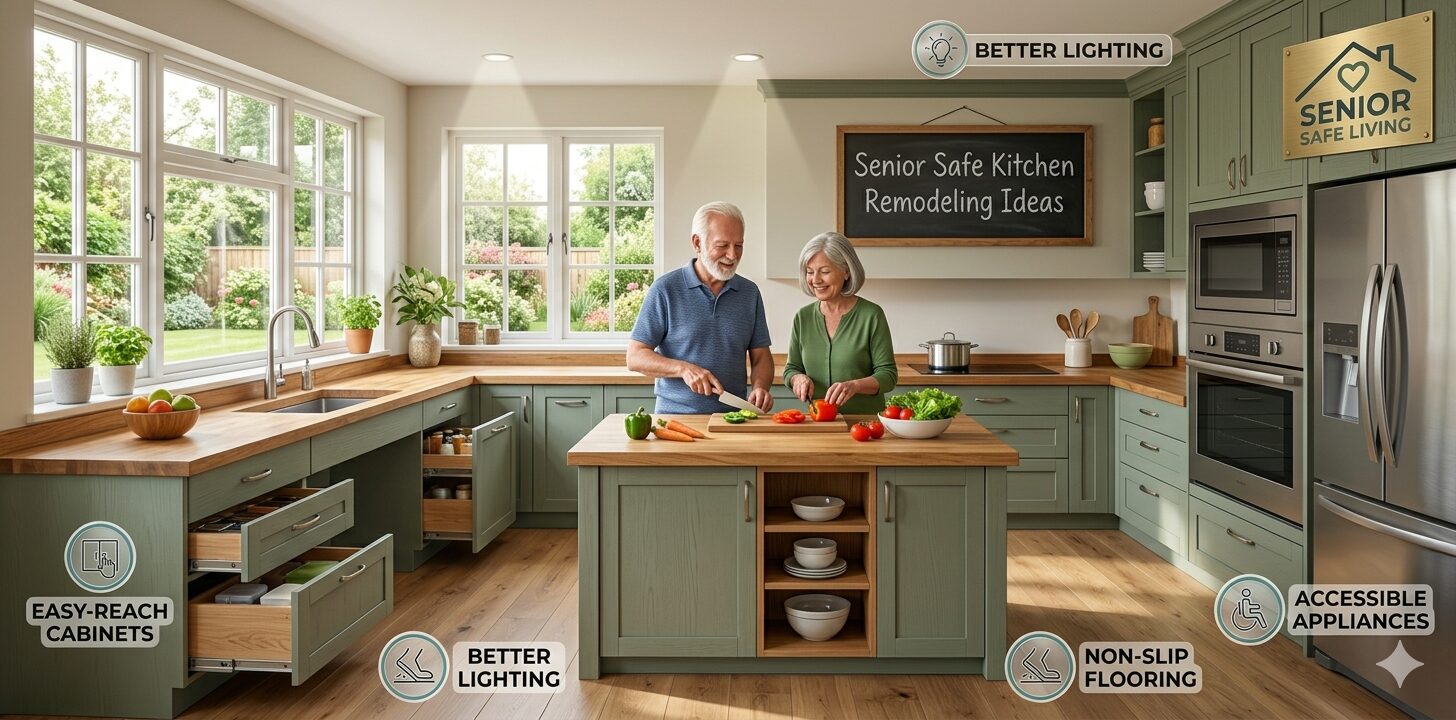
Senior Safe Kitchen Remodeling Ideas
Creating a safe and comfortable kitchen becomes increasingly important as homeowners age. Everyday tasks like reaching cabinets, standing for long periods, or walking on slippery floors can become difficult and even dangerous over time. That’s why many families are now exploring senior safe kitchen remodeling ideas that improve comfort, accessibility, and independence. A well-planned remodel can reduce accident risks while making cooking and daily routines easier to manage. From better lighting and slip-resistant flooring to smarter layouts and ergonomic storage, modern upgrades can greatly improve kitchen safety for seniors without sacrificing style. In this guide, we’ll explore practical remodeling solutions, expert tips, and real-life strategies that help create a functional and welcoming kitchen designed for long-term safety and everyday convenience.
Why Senior-Friendly Kitchens Matter More Than Ever
Many older adults want to remain in their homes as long as possible. However, the kitchen can become increasingly difficult to use due to reduced mobility, arthritis, balance issues, or vision changes.
A poorly designed kitchen may lead to:
- Falls caused by slippery surfaces
- Strain from bending or reaching
- Burns from unsafe appliance placement
- Difficulty accessing cookware or food storage
- Fatigue from standing too long
An effective remodel focuses on prevention rather than reaction. Good planning allows seniors to continue cooking independently and safely without making the kitchen feel clinical or institutional.
The goal of an accessible kitchen design is simple: make everyday tasks easier, safer, and more comfortable.
Senior Kitchen Layout Ideas That Improve Daily Movement
One of the biggest mistakes in kitchen remodeling is focusing only on aesthetics. In a senior kitchen, layout matters far more than decorative trends.
Create Wider Walkways
Narrow pathways become dangerous when using walkers, canes, or wheelchairs. A safe kitchen layout should include:
- Walkways at least 42–48 inches wide
- Clear movement between appliances
- Minimal sharp corners or protruding edges
- Enough turning space for mobility aids
Open layouts also reduce the likelihood of bumping into cabinets or counters.
Keep Frequently Used Items Within Reach
Upper cabinets may become difficult or unsafe to access over time. Instead:
- Store everyday dishes in lower pull-out drawers
- Install pull-down shelving systems
- Keep cookware near the cooking zone
- Avoid deep overhead storage
These small adjustments significantly improve usability.
Consider a Multi-Level Countertop
Different counter heights help accommodate various needs:
- Standard prep areas
- Lower sections for seated use
- Baking stations with knee clearance
This type of accessible design allows seniors to continue cooking comfortably even with reduced stamina or mobility.
Kitchen Safety Features Every Senior-Friendly Remodel Should Include
When discussing kitchen safety for seniors, the most effective upgrades are often the simplest.
Install Slip-Resistant Flooring
Falls remain one of the leading causes of injury among older adults. Flooring plays a major role in preventing accidents.
Recommended materials include:
- Textured vinyl
- Cork flooring
- Matte-finish tile
- Slip-resistant laminate
Avoid:
- Highly polished tile
- Uneven surfaces
- Thick rugs or loose mats
Cork is especially popular because it provides cushioning underfoot, reducing strain during long cooking sessions.
Improve Lighting Throughout the Kitchen
Poor visibility increases accident risks dramatically.
A safe kitchen should include:
- Under-cabinet lighting
- Bright overhead LED fixtures
- Motion-sensor lighting
- Task lighting near prep areas
- Reduced shadows around sinks and stoves
Natural lighting also improves visibility and creates a more inviting atmosphere.
Add Rounded Counter Edges
Sharp countertop corners can cause serious injuries during falls or collisions. Rounded or eased edges are a safer alternative without sacrificing style.
Accessible Kitchen Design Features That Make Cooking Easier
A successful accessible kitchen design blends ergonomics with practical functionality.
Use Pull-Out Shelving and Deep Drawers
Traditional lower cabinets force users to bend and reach awkwardly. Pull-out shelves eliminate this issue.
Benefits include:
- Easier access to cookware
- Reduced strain on knees and back
- Better organization
- Improved visibility of stored items
Deep drawers are often safer and more convenient than cabinets with doors.
Choose D-Shaped Cabinet Handles
Small knobs can become difficult to grip for individuals with arthritis.
D-shaped handles are easier to use because they:
- Require less hand strength
- Improve accessibility
- Reduce wrist strain
- Allow easier opening with limited dexterity
This is one of the simplest yet most effective remodeling upgrades.
Install Touchless Faucets
Touchless or lever-style faucets improve hygiene and usability.
They help seniors who may struggle with:
- Grip strength
- Hand pain
- Limited mobility
- Temperature adjustment
Many modern models also include anti-scald protection for additional safety.
Kitchen Safety Strategies for Cooking Appliances
Appliances should support safe movement and easy operation.
Wall Ovens Reduce Bending
Traditional ovens positioned below countertops require repeated bending, which can increase fall risks.
Wall ovens positioned at waist height allow:
- Easier access
- Safer food handling
- Better visibility
- Reduced back strain
Induction Cooktops Improve Kitchen Safety
Induction cooking is becoming increasingly popular in kitchen safety planning.
Unlike gas or traditional electric ranges:
- The surface stays cooler
- Cooking stops when cookware is removed
- Burn risks decrease significantly
- Temperature control improves
This is especially valuable for seniors experiencing memory challenges or slower reaction times.
Side-by-Side Refrigerators Improve Accessibility
Bottom-freezer models may require excessive bending. Side-by-side refrigerators often provide easier access to commonly used items.
Look for models with:
- Easy-grip handles
- Adjustable shelving
- Bright interior lighting
- Water dispensers at accessible heights
Smart Technology for Senior Kitchen Safety
Technology can make kitchens safer and more manageable without overcomplicating daily life.
Voice-Controlled Assistance
Smart home systems can help seniors:
- Set cooking timers
- Control lighting
- Create grocery lists
- Adjust appliances hands-free
Voice functionality is particularly helpful for individuals with mobility limitations.
Automatic Shut-Off Features
Forgetfulness can create serious hazards in the kitchen.
Smart appliances with auto shut-off features can prevent:
- Stove fires
- Overheating
- Burned cookware
- Electrical hazards
These upgrades provide peace of mind for both seniors and family members.
Motion-Sensor Lighting
Nighttime kitchen visits become safer with motion-activated lighting. These systems eliminate the need to search for switches in dark spaces.
Renovation Ideas That Improve Comfort During Daily Use
Comfort is just as important as safety.
Add Seating Areas
Standing for long periods becomes difficult with age.
Consider:
- Pull-out seating
- Breakfast bars with knee clearance
- Adjustable-height chairs
- Rest areas near prep zones
These additions allow seniors to remain active in the kitchen without overexertion.
Reduce Noise and Echo
Many older adults become sensitive to loud or echoing environments.
Soft-close cabinetry, cork flooring, and sound-absorbing materials create a calmer kitchen atmosphere.
Improve Ventilation
Good airflow helps remove smoke, odors, and excess heat.
A quality ventilation system improves comfort while supporting respiratory health.
Common Mistakes in Senior Kitchen Remodeling
Even well-intentioned remodels can create new problems if accessibility isn’t carefully considered.
Prioritizing Style Over Function
Minimalist trends sometimes sacrifice usability.
Examples include:
- Handleless cabinets
- High-gloss slippery floors
- Excessively deep counters
- Poor lighting design
A beautiful kitchen should still function safely for everyday use.
Ignoring Future Mobility Needs
Some homeowners remodel only for current conditions rather than future needs.
A better approach includes planning ahead for:
- Wheelchair accessibility
- Walker clearance
- Reduced flexibility
- Limited strength
Future-proofing saves money and avoids additional renovations later.
Overcrowding the Kitchen
Too many islands, stools, or decorative features can restrict movement.
A safe kitchen should feel open and uncluttered.
Expert Tips for Long-Term Kitchen Safety for Seniors
Experienced remodelers often notice the same challenges repeatedly in aging-in-place projects.
Here are some practical recommendations that consistently make a difference.
Focus on Workflow First
Before selecting finishes or colors, analyze how the kitchen is actually used.
Questions to consider:
- Where is most prep work done?
- Which cabinets are used daily?
- Are appliances positioned conveniently?
- Is movement between zones efficient?
Good workflow reduces fatigue and frustration.
Test Materials Before Installation
Some flooring or hardware may look appealing online but feel uncomfortable in real-world use.
Testing materials in person helps evaluate:
- Grip
- Texture
- Ease of cleaning
- Comfort underfoot
Choose Easy-Maintenance Surfaces
Complicated upkeep becomes harder with age.
Low-maintenance materials reduce stress and simplify cleaning routines.
Good options include:
- Quartz countertops
- Fingerprint-resistant appliances
- Durable cabinet finishes
- Easy-clean backsplashes
Creating an Accessible Design Without Sacrificing Style
Many homeowners worry that accessibility-focused remodeling will make the kitchen look overly medical or outdated.
Fortunately, modern accessible design blends beautifully with contemporary aesthetics.
Popular senior-friendly design trends include:
- Warm wood cabinetry
- Matte finishes
- Open shelving
- Soft neutral palettes
- Hidden accessibility features
- Minimal-threshold flooring transitions
The best kitchens feel inviting, elegant, and practical all at once.
Real-Life Remodeling Scenarios That Improve Everyday Living
Scenario 1: Arthritis-Friendly Kitchen Upgrades
A homeowner experiencing arthritis struggled with cabinet knobs, heavy drawers, and traditional faucets.
After remodeling:
- Lever handles replaced knobs
- Drawers became soft-close pull-outs
- Touchless faucets improved accessibility
The kitchen became easier and less painful to use daily.
Scenario 2: Aging in Place After a Fall
Following a fall injury, a retired couple redesigned their kitchen for safer mobility.
Changes included:
- Wider pathways
- Slip-resistant flooring
- Better task lighting
- Seated prep stations
These improvements restored confidence and independence in the kitchen.
Conclusion
A thoughtfully designed kitchen can make a significant difference in safety, comfort, and independence for older adults. The best senior safe kitchen remodeling ideas focus on reducing physical strain, preventing accidents, and improving everyday usability through smart planning and accessible features. Simple upgrades like better lighting, pull-out storage, wider walkways, and slip-resistant flooring can greatly enhance kitchen safety for seniors while keeping the space stylish and functional. Whether you’re planning for aging in place or helping a loved one adapt their home, investing in an accessible kitchen design creates long-term value and peace of mind. With careful planning and practical renovation choices, homeowners can enjoy a kitchen that remains safe, efficient, and comfortable for many years to come.